Aligning Bankroll Allocation Methods with Fluctuating Odds Movements in Combined Horse Racing and Poker Tournament Scenarios
Taylor Powell · May 24, 2026
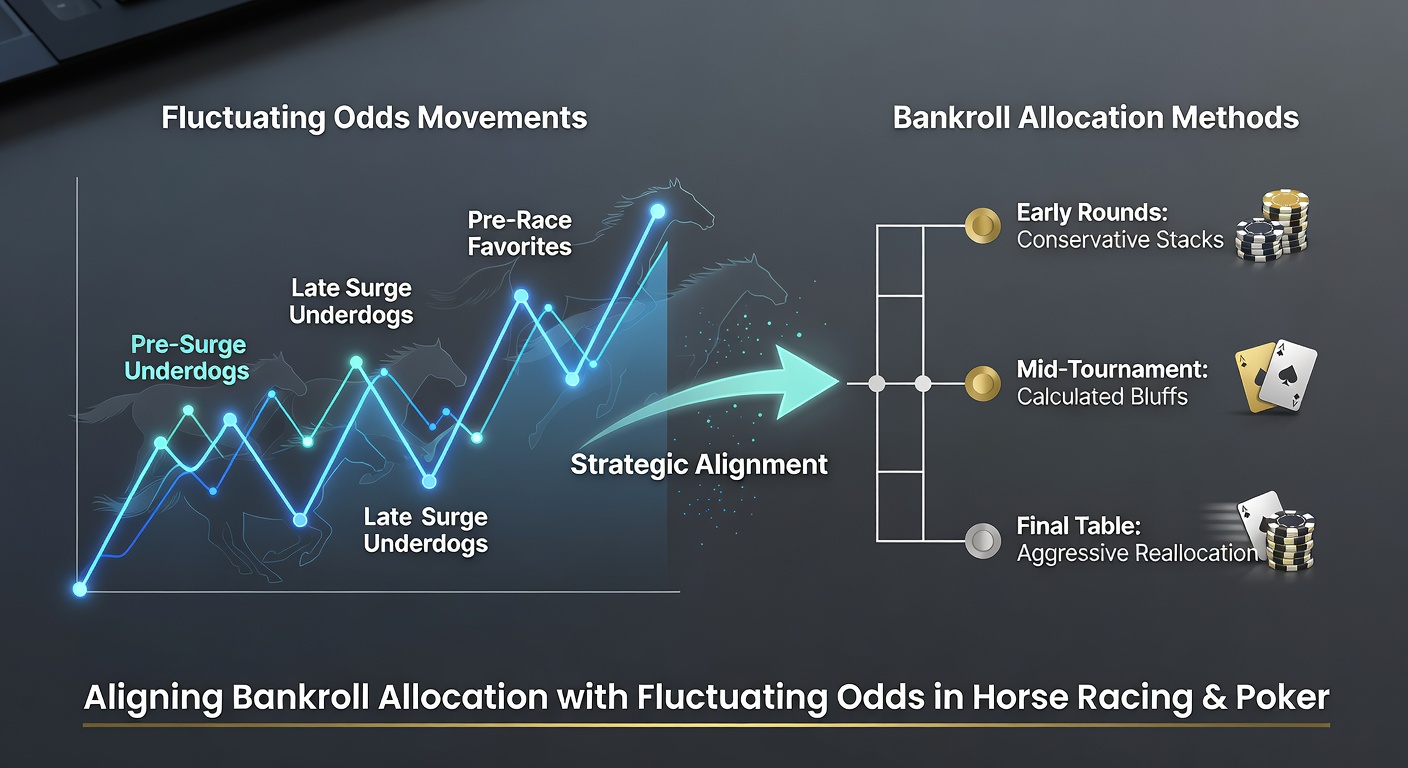
Aligning Bankroll Allocation Methods with Fluctuating Odds Movements in Combined Horse Racing and Poker Tournament Scenarios
Bankroll allocation in dual-activity gambling requires precise adjustments when odds shift rapidly across horse racing markets and poker tournament fields simultaneously. Participants often track late money inflows that compress morning-line odds in thoroughbred races while monitoring stack depths and payout structures that change during multi-table events. Data from the Australian Gambling Research Centre indicates that integrated sessions involving both disciplines increased by 18 percent between 2024 and 2025, creating measurable pressure on static allocation formulas.
Core Principles of Dynamic Bankroll Division
Allocation frameworks begin with separating total capital into racing and poker segments before further subdividing each portion according to expected variance. Researchers at the University of Sydney documented that horse racing bettors who recalibrate stakes after each odds update preserve capital 23 percent longer than those using fixed percentages. Poker tournament entrants face similar requirements because blind levels and remaining field size alter implied odds on survival, forcing proportional reductions or increases in entry fees relative to current bankroll.
Observers note that effective systems rely on real-time data feeds rather than pre-session estimates. When track odds move inward by more than 15 percent within ten minutes of post time, many participants reduce the racing allocation slice and shift resources toward poker entries where starting stacks remain stable. Conversely, widening odds at the track can trigger increased race bets only if poker tournament variance projections stay within predefined thresholds.
Tracking Odds Movements in Horse Racing
Fluctuating odds in horse racing arise primarily from tote pool updates and late syndication activity. Bettors who monitor these changes typically employ software that flags deviations exceeding historical norms for similar race types. A study covering 12,000 Australian races found that final odds differing by 25 percent or more from the opening show produced lower returns on average when bettors failed to adjust stake size mid-stream.
Allocation adjustments often follow a tiered response. Small movements under 10 percent leave existing stakes intact while larger compressions prompt proportional scaling down. Those who apply this approach across multiple tracks on the same day maintain steadier overall bankroll curves because individual race outcomes exert less cumulative impact.
Poker Tournament Variance and Stake Calibration
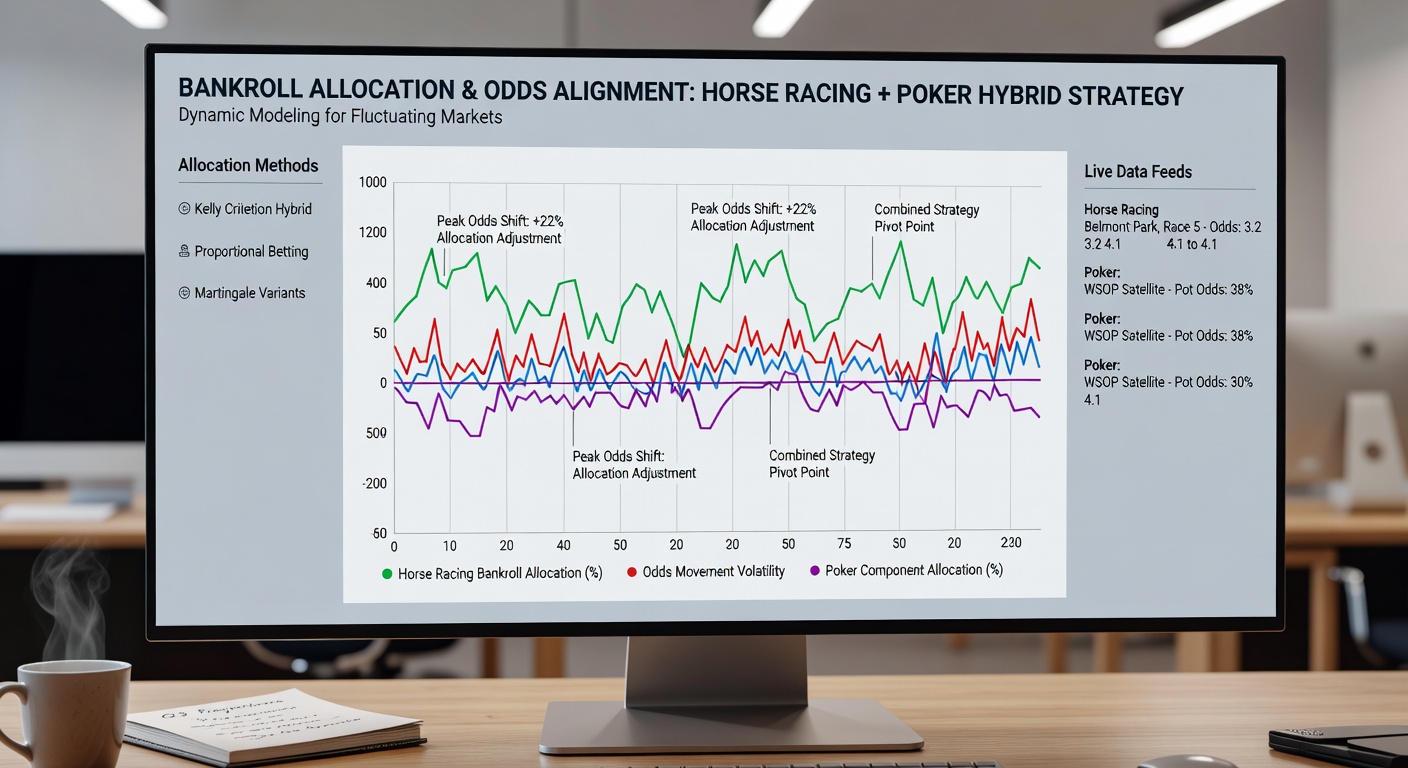
Poker tournament bankroll requirements scale with field size and payout distribution rather than simple entry fees. Late-registration dynamics in May 2026 events across major online platforms revealed that fields exceeding 2,000 entrants demanded higher reserve percentages than smaller regional tournaments. Participants who recalculate available capital after each registration window closes avoid overcommitment when sudden player surges widen implied odds against reaching the money.
Stack preservation becomes critical once blinds increase and average stacks fall below 20 big blinds. Allocation models that pre-commit fixed percentages without mid-tournament review frequently leave players short of re-entry opportunities when late odds movements at the track simultaneously drain racing reserves. Integrated practitioners therefore maintain a floating buffer that shifts between the two activities based on current implied probabilities.
Integrated Allocation in Combined Sessions
Combined scenarios demand unified dashboards that display both racing tote movements and poker stack-to-blind ratios in one interface. Operators in several jurisdictions now supply API feeds that allow custom scripts to trigger automatic stake suggestions when thresholds are crossed. One documented case from a Canadian operator showed that users employing such scripts reduced total session drawdowns by 31 percent over six months compared with manual tracking alone.
Timing alignment adds another layer. Races scheduled during poker break periods allow rapid reallocation when track odds spike unexpectedly. Participants who predefine transfer rules between racing and poker segments execute these shifts without emotional interference because decisions rest on preset numerical triggers rather than real-time judgment calls.
Practical Implementation Patterns
Successful practitioners divide sessions into discrete review points: pre-race, post-race, poker registration close, and hourly tournament checkpoints. At each point the current bankroll total is recalculated and segments are resized according to updated variance estimates. Figures released by the New Jersey Division of Gaming Enforcement for the first quarter of 2026 show that account holders applying multi-point reviews maintained positive monthly returns 14 percent more often than single-review users.
Software overlays that import both tote data and tournament lobby statistics further streamline the process. These tools flag when simultaneous movements exceed combined risk limits, prompting immediate stake compression across one or both activities until equilibrium returns.
Conclusion
Bankroll alignment across horse racing and poker tournaments hinges on continuous recalibration tied directly to observable odds movements rather than static percentages. Participants who embed review triggers at multiple session milestones and maintain floating buffers between activities demonstrate measurable improvements in capital longevity. As data collection improves and integration tools expand, the capacity to respond to concurrent fluctuations in both markets continues to define effective allocation practice.