Analyzing Correlation Between Promotional Offer Structures and User Retention Metrics in Multi-Game Wagering Environments
Taylor Powell · Jun 19, 2026
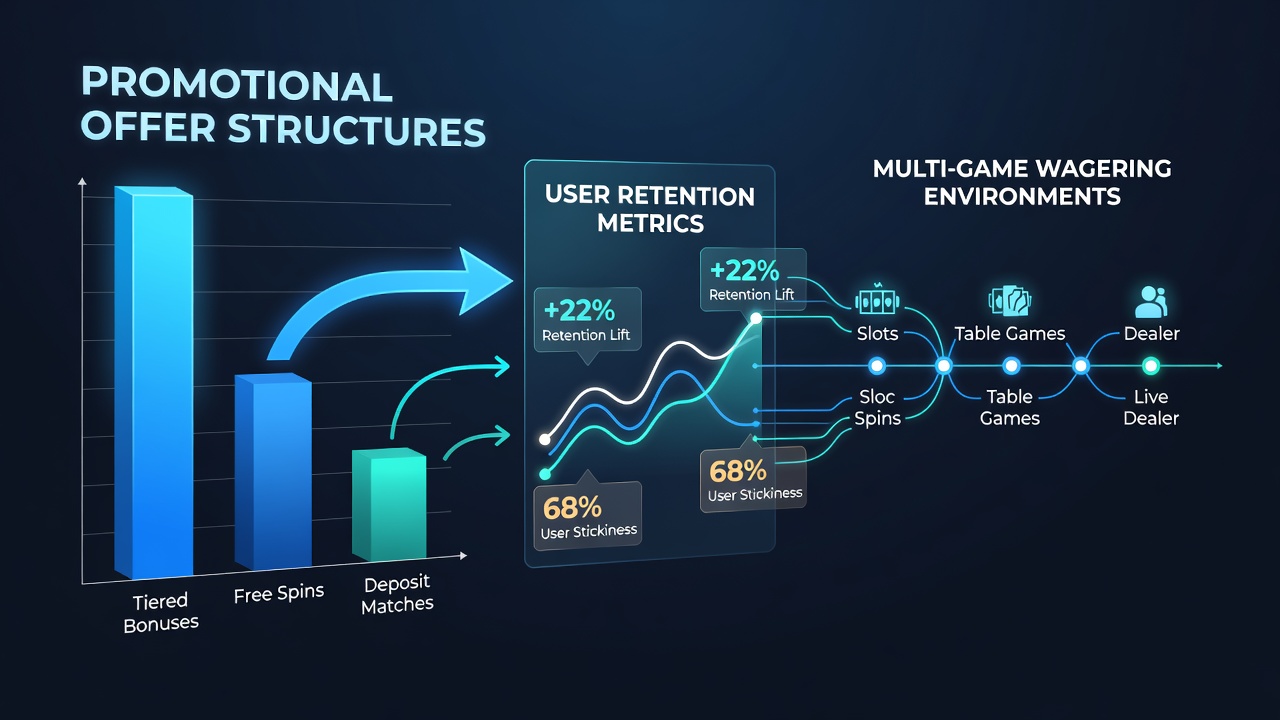
Analyzing Correlation Between Promotional Offer Structures and User Retention Metrics in Multi-Game Wagering Environments
Multi-game wagering environments combine sports betting, casino games, poker tournaments, and horse racing under single operator platforms, and promotional offer structures in these spaces range from deposit matches and free bet credits to tiered loyalty rewards that unlock based on cumulative activity across verticals. Researchers track retention metrics such as monthly active users, average session duration, repeat deposit frequency, and lifetime value calculations to identify patterns that link specific promotions to sustained engagement, while operators collect granular data from player accounts to measure how offer types influence churn rates over time.
Promotional Offer Structures in Integrated Platforms
Operators design promotional structures around welcome bonuses that often split across sports and casino products, ongoing reload offers tied to weekly activity thresholds, and cashback programs that return percentages of losses from multiple game types. Data from platform analytics shows these structures frequently segment users by behavior clusters, with high-volume sports bettors receiving accumulator boosts while casino players encounter free spin packages that encourage cross-vertical exploration, and analysts apply regression models to quantify how bonus wagering requirements correlate with subsequent deposit patterns.
Studies conducted by the American Gaming Association indicate that platforms integrating loyalty tiers across games experience measurable shifts in retention when promotions emphasize multi-product participation rather than single-vertical incentives, and figures from North American operators reveal deposit frequency rising in tandem with reward structures that grant points transferable between sports and table games.
Key User Retention Metrics and Measurement Approaches
Retention metrics in these environments include cohort-based survival rates that track how long users remain active after receiving an initial offer, alongside metrics such as average revenue per retained user and the ratio of promotional redemptions to organic deposits. Analysts employ statistical correlation techniques including Pearson coefficients and logistic regression to assess relationships between offer redemption volumes and continued platform usage, while accounting for variables like market conditions and seasonal event calendars that affect overall wagering volumes.
Data Patterns Observed Through Mid-2026
Records compiled through June 2026 show operators adjusting promotional calendars ahead of major international tournaments, and tracking data reveals stronger retention correlations when offers align bonus structures with user-preferred game categories rather than blanket incentives distributed across all verticals. Canadian regulatory filings from provincial gaming authorities highlight similar trends in integrated resort platforms where cross-game loyalty programs produced higher repeat engagement rates compared to isolated product promotions.

Statistical Correlation Methods and Findings
Research teams apply time-series analysis to isolate the impact of specific promotional launches on retention curves, comparing pre-offer and post-offer periods while controlling for external factors such as payment processing speeds and platform uptime. Reports from the European Gaming and Betting Association document cases where tiered cashback structures tied to multi-game activity produced retention lifts that exceeded those from single-product free bet credits, and the data indicates stronger positive correlations when wagering requirements remain moderate enough to allow users to complete them within typical session lengths.
Observers note that platforms deploying personalized offers based on historical game preferences achieve tighter alignment between promotion redemption and long-term retention, whereas generic structures sometimes generate short-term spikes followed by accelerated churn once the initial bonus cycle concludes. Australian industry reports further illustrate how operators using segmented bonus structures across sports and casino verticals maintain steadier retention trajectories during off-peak months compared to uniform promotional campaigns.
Factors Modifying Correlation Strength
Market-specific regulations influence how operators structure promotions and subsequently affect retention correlations, with licensing conditions in various jurisdictions dictating maximum bonus values and playthrough multiples that in turn shape user response patterns. Payment integration speeds and digital wallet compatibility also modify outcomes, as faster transaction processing tends to amplify the retention benefits of time-sensitive offers that require prompt deposits to activate rewards.
Platform features such as unified wallets and seamless navigation between game types strengthen the observed links between promotional uptake and retention, while fragmented experiences across verticals can weaken those same correlations even when the underlying offer structures remain comparable.
Conclusion
Analysis of promotional offer structures against retention metrics in multi-game wagering environments relies on ongoing data collection and refined statistical modeling to identify actionable patterns. Operators continue to refine segmentation approaches and reward mechanics based on observed correlations, while regulatory bodies across regions monitor these dynamics to ensure compliance and market stability. The relationships between specific promotion designs and sustained user engagement remain central to platform strategy as multi-vertical environments expand.