Mapping Digital Interface Refresh Cycles to Decision Timelines for Table Game Participants in Multi-Venue Complexes
Rafael Koch · Jul 28, 2026
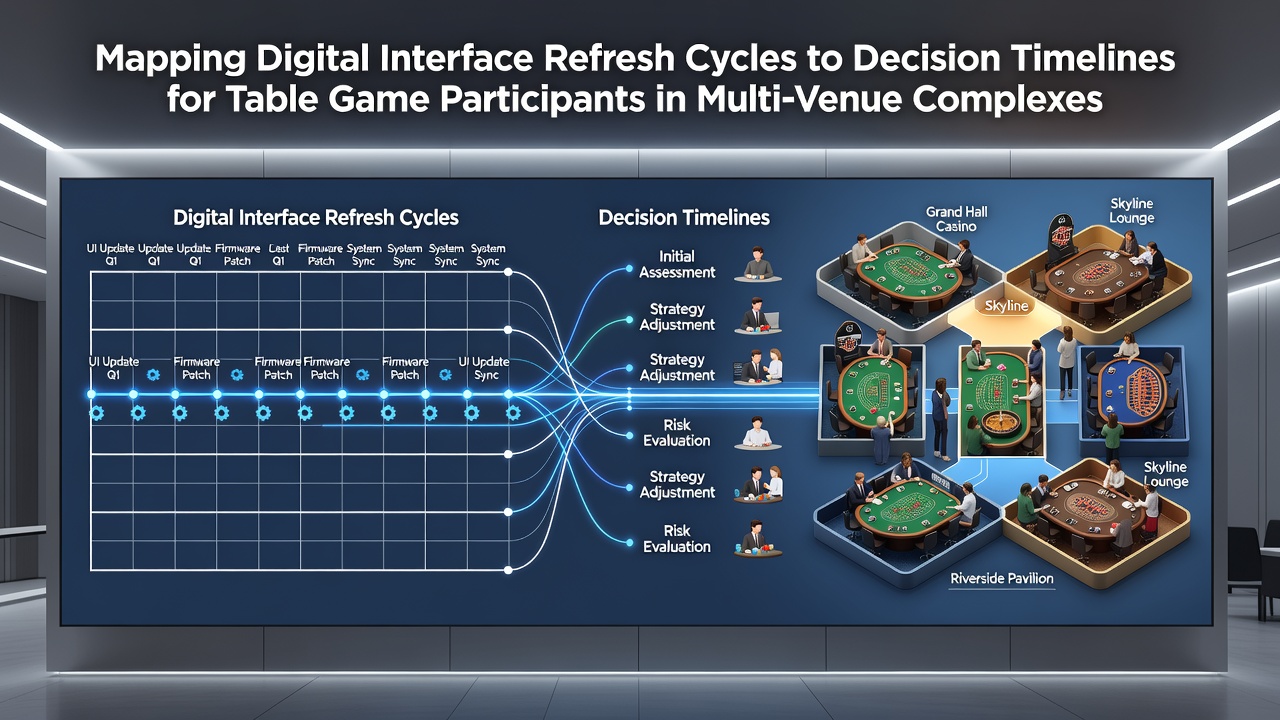
Mapping Digital Interface Refresh Cycles to Decision Timelines for Table Game Participants in Multi-Venue Complexes
Digital screens at table games refresh at fixed intervals that operators set to balance data accuracy with system load, and those cycles intersect directly with the seconds players receive to place bets or signal decisions in blackjack, roulette, and baccarat. Observers note that multi-venue complexes integrate central servers across properties, so one refresh wave can reach dozens of tables simultaneously while each local screen buffers its own display update.
Interface Refresh Mechanics in Integrated Resorts
Table-side terminals pull live odds, minimums, and promotional overlays from a shared database every four to twelve seconds depending on the property's configuration, while mobile companion apps used by players sync at staggered rates to reduce server strain. Data from the Nevada Gaming Control Board shows that properties operating under a single license across multiple sites recorded an average interface cycle of 7.2 seconds during the first half of 2026, with shorter cycles appearing during peak evening hours when decision volume spikes.
Those cycles matter because average decision windows at standard blackjack tables run between twelve and twenty seconds after the dealer finishes the initial deal, and any mismatch between screen refresh and that window can leave participants working with stale minimums or outdated side-bet promotions. Researchers at the University of Nevada, Las Vegas documented that players who relied on companion apps for real-time information adjusted their wagers within the first eight seconds of their turn when the app had refreshed within the prior five seconds, whereas longer gaps produced hesitation patterns visible in surveillance logs.
Decision Timelines Across Game Types
Blackjack decisions cluster tightly around the twelve-second mark in most venues, yet roulette spin cycles allow up to forty-five seconds before the next ball drop, giving interface updates more room to land without disrupting flow. Baccarat participants face even shorter windows once cards are dealt, often under ten seconds, which forces operators to calibrate refresh timing so that commission rates and shoe penetration data reach the screen before the next hand begins. Multi-venue operators coordinate these timings through centralized dashboards that track both local table activity and cross-property traffic, adjusting cycles when one site experiences heavier foot traffic than another.
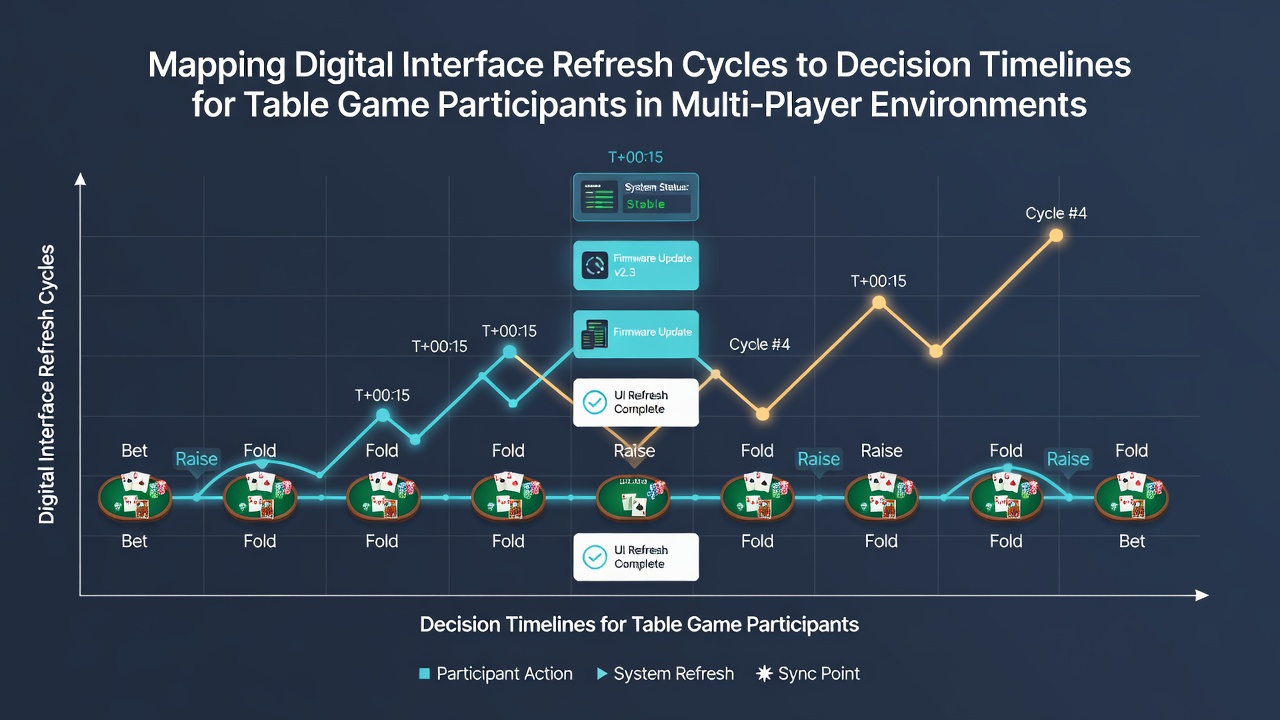
July 2026 brought incremental upgrades to several integrated resorts in the Southwest, where new edge-computing nodes reduced average refresh latency by 1.8 seconds across linked properties. Figures released by the Nevada Gaming Control Board indicate that these nodes handled 14 percent more concurrent table sessions without increasing error rates in displayed information.
Coordination Challenges in Multi-Venue Settings
Complexes that span several blocks or separate buildings must account for network latency between sites, and technicians route updates through fiber loops that introduce an additional 300 to 800 milliseconds of delay. When a player moves from one venue to another mid-session, the companion app must re-authenticate and pull fresh data, which can extend the effective refresh cycle by two to four seconds. Operators mitigate this by pre-loading session tokens at entry points so that returning devices resume updates without full re-sync.
Studies conducted by the Canadian Gaming Association in partnership with regional operators found that synchronized refresh schedules across three linked properties improved the alignment between displayed promotions and actual decision windows by 22 percent compared with independent site schedules. The same research tracked 1,240 table sessions and noted that misalignment occurred most often during shift changes when floor staff manually adjusted minimums at individual tables before the central system propagated the change.
Practical Mapping Approaches
Operators create lookup tables that pair each game type with its typical decision window and then set refresh targets at 60 to 70 percent of that window to leave buffer time for transmission. For instance, a blackjack table with a fifteen-second average decision receives an eight-second refresh cycle, while a slower-paced pai gow poker table operates comfortably on a twelve-second cycle. Software dashboards display these pairings in real time, allowing floor supervisors to override cycles when special events or high-limit action alters normal pacing.
Participants who monitor these patterns often position themselves at tables where the visible screen timestamp aligns closely with their decision rhythm, reducing reliance on verbal confirmation from dealers. Training materials distributed by resort operators in 2026 emphasized that understanding refresh cadence helps players anticipate when updated promotions or rule changes will appear, though the actual decision to wager remains governed by house rules and personal bankroll limits.
Conclusion
Mapping refresh cycles to decision timelines requires continuous calibration between technical infrastructure and observed game pacing across all connected venues. Properties that maintain these alignments report smoother information flow and fewer instances of players requesting verbal updates mid-hand. As multi-venue complexes expand their digital layers, the relationship between screen updates and table timing continues to shape how participants interact with both the game and the surrounding technology environment.